DAY 41 OF 90 · THE JEREMIAH GENERATION
The Paga Makom -- Part Two
“Then Jacob awoke from his sleep and said, ‘Surely the LORD is in this place, and I did not know it.’ And he was afraid and said, ‘How awesome is this place! This is none other than the house of God, and this is the gate of heaven!’”
Genesis 28:16–17
Yesterday, we arrived at the place (makom) with Jacob—a tired man, a stone for a pillow, and two Hebrew words that contain between them the entire theology of intercession, encounter, and the appointed places of God. We learned that paga is not merely prayer but breakthrough intercession: the same Hebrew root that describes an intercessor pressing into God also describes a warrior falling upon what has been fortified against God’s purposes. We learned that the place (HaMakom) is not merely a location but a site marked by the living God from before the foundation of the earth, where heaven and earth were always meant to meet.
And we stood at the threshold of the third day, our eyes being lifted by the Spirit to see what Abraham saw on the third morning of his journey toward the altar: the appointed place, afar off, coming into view.
Today we press deeper. We follow Jacob all the way to morning, and we ask what the encounter at the makom actually produces—what it looks like when the paga has opened the heavens, when the stone has become a pillar, and when the intercessor discovers that the place he arrived at in exhaustion was, all along, the house of God and the gate of heaven. The paga makom does not simply show us where to pray. It shows us who we are becoming in the act of pressing in.
ALTARS – WHERE HEAVEN ADDRESSES EARTH
Here is the theological principle that ties every thread together: establishing an open door between heaven and earth depends on an altar. This is not incidental to the story of Jacob at Bethel; this is the whole point of it. When Jacob woke from his dream and said “How awesome is this place! This is none other than the house of God, and this is the gate of heaven,” he was recognizing something that the patriarchs understood with a clarity we have largely lost: the earth is not a spiritually neutral landscape across which human beings move at random.
Earth is a geography saturated with divine assignment, where God has designed and appointed certain places from before the foundation of the earth as sites where the heavenly and earthly are meant to converge, where the ladder is meant to be established, and where the place (makom) becomes the gate. The question I would propose to the reader is: where is that place, and where is that gate in the region that the Lord has positioned you in?
The biblical altar is, in its deepest nature, five things simultaneously:
A place of divine communication, where worship, thanksgiving, and the voice of God are heard and recorded.
A place of consecration, where something is set apart from the ordinary and given over entirely to the purpose of God.
A place of covenant and covenant renewal, where agreements between heaven and earth are sealed and remembered.
A place that connects heaven with earth; and a place that connects the natural with the supernatural.
The earthly altar is never self-sufficient—it is always a shadow of a heavenly altar, an earthly vessel of a heavenly reality, drawing its authority and its fire from above.
Revelation 8 opens a window into the heavenly realm of this reality. It should never be read merely as a vision of future things; it is a present-tense description of what is happening in the heavens at this very moment, while we pray, while we fast, and while we gather at the appointed places God has designated in our regions and cities. John sees an angel with a golden censer standing at the golden altar before the throne of God, being given much incense to offer with the prayers of all the saints.
The smoke of the incense ascends before God with those prayers. Then the angel fills that censer with fire from the altar and hurls it to the earth, and there are thunderings, lightnings, and an earthquake. The earthly prayers of the saints—the palal, the tefilla, and the paga—do not evaporate into silence when they leave our mouths and bodies and the appointed places where we stand and intercede. They ascend to a golden altar, mingle with heavenly incense, rise before the throne, and then fire comes down.
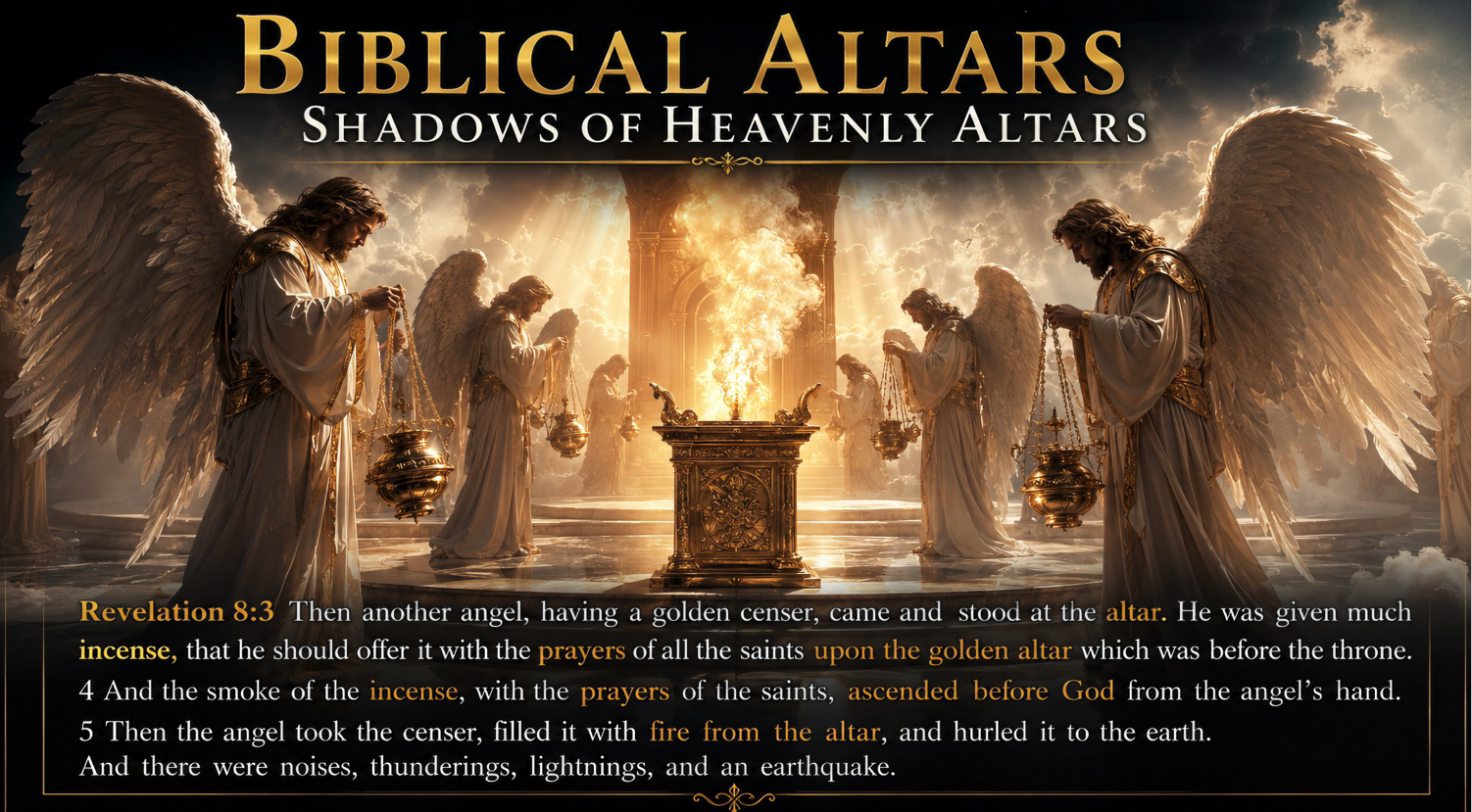
Revelation 8:3–4 “Then another angel, having a golden censer, came and stood at the altar. He was given much incense, that he should offer it with the prayers of all the saints upon the golden altar which was before the throne. And the smoke of the incense, with the prayers of the saints, ascended before God from the angel’s hand.”
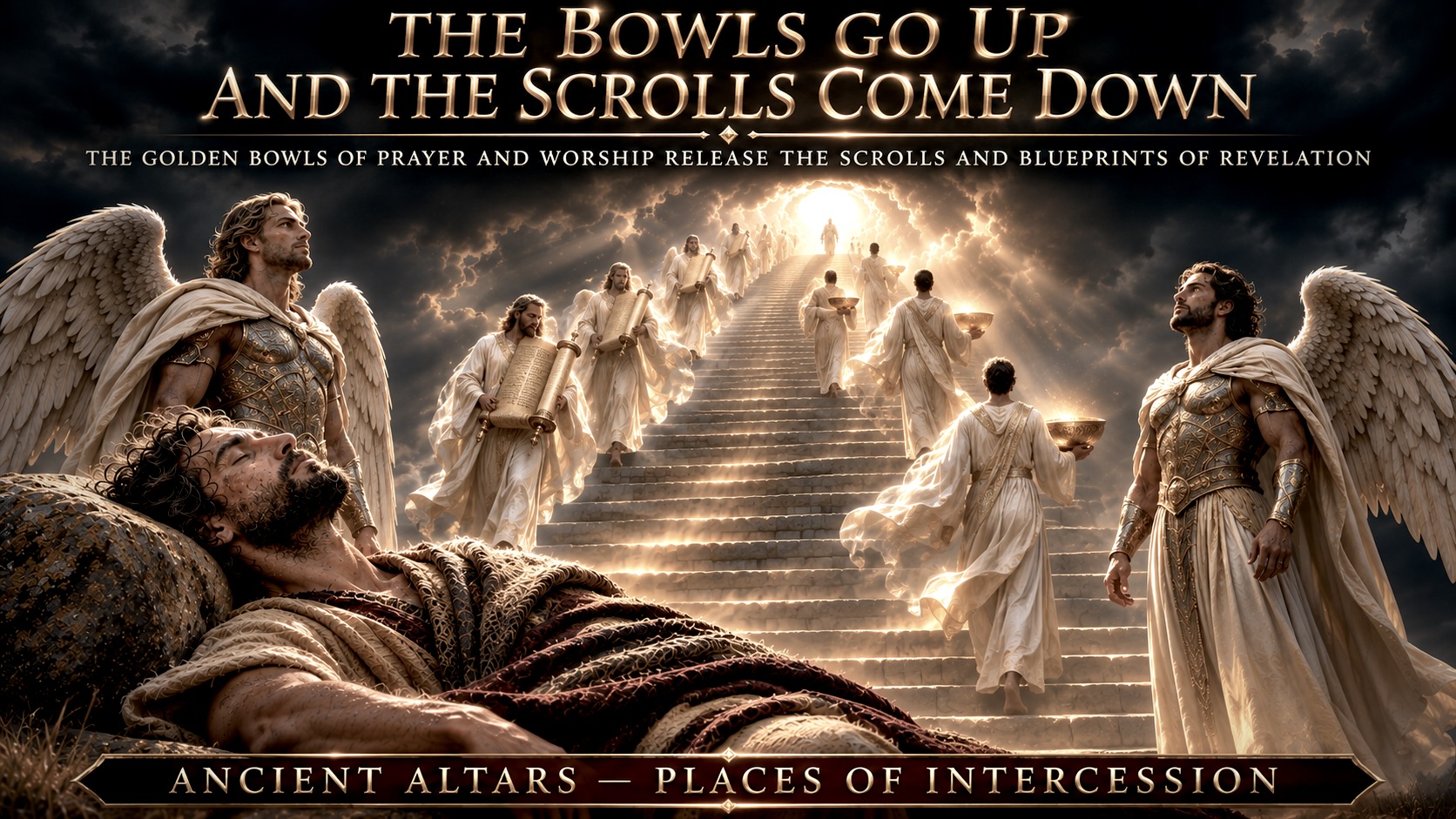
This is what the enemy fights so relentlessly at the paga makom. In my early years of ministry in Flint, Michigan, during a moment of intense prophetic intercession, I experienced an open vision that defined and clarified the importance of worship, prayer and intercession. In the vision I saw angels ascending from the earth with golden bowls, and I knew from Revelation 5 and Revelation 8 that those bowls held the prayers and worship of the saints—the accumulated intercession of a people who had gathered at the appointed place and poured out their hearts before God. But the vision did not end with what was going up. I also saw angels descending, and in their hands were not bowls but scrolls—scrolls of revelation, blueprints, and divine strategies, the written mandates of heaven being carried down toward the earth, toward the people of God who had established the place of paga.
The enemy does not fight the places of intercession because he is afraid of the prayers that ascend. He fights them because he knows what comes down: the blueprints for regional restoration, the strategies for covenant breakthrough, the decrees of a God who has decided to build his altar of Zion on the earth through a people who have become the living point of contact between the heavenly and the earthly.
As I travel and minister across this nation and beyond, I have learned to ask the Father one question over every piece of land I stand on: What were you thinking when you created this place? What was your original intent—not just for the people, but for the land itself? The land has a divine assignment that precedes its human history—an appointment written into its very composition from before the foundation of the earth, a makom-quality that can be suppressed, defiled, and occupied by the enemy across generations, but never ultimately erased, because what God has appointed, he has appointed from eternity.
THE STONE BENEATH THE HEAD
When Jacob “took one of the stones of that place and put it at his head” and lay down to sleep, the most natural reading is that he found a convenient rock for a pillow on a night journey without supplies. But if the place is Moriah, then the stone beneath his head is a stone from Abraham’s altar—laid in careful, covenantal arrangement for the binding of Isaac, a stone that had already been a witness to fire and knife and the voice of an angel saying “do not lay your hand on the lad.” Jacob’s head rested on the altar stone. His sleep was the sleep of a man who had, without knowing it, lain down across a threshold between two realms; a thin place between heaven and earth had already been thinned by the covenantal transactions of the generation before him, where the PLACE (makom) carried the memory of blood and fire and divine provision in its very stones.
The apostle Paul uses Hebraic imagery in a declaration in his first letter to the Corinthians that reaches all the way back to this moment: “that Rock was Christ” (1 Corinthians 10:4). Paul was speaking about the rock that Moses struck in the wilderness, the rock that poured out water for a thirsty people, the foundational stone that traveled with Israel as a spiritual companion through every season of their wandering—and his declaration is that behind that rock, beneath it, and within it was the pre-incarnate Christ, present in the wilderness as the bedrock of a people who did not yet know his name. If that Rock was Christ, then there is a word to receive from Jacob laying his head on the stone at Bethel, because Jacob was doing prophetically what every generation of God’s people is called to do: laying down the weight of the natural mind, the intellect, the cleverness, the wisdom formed by human striving and shaped by the philosophical systems of the age and resting it on the Rock of Messiah.
When we lay our interpretations down on that Rock, when we lay the Greco-Roman framework we have inherited for reading the Scriptures on the Hebrew word-picture revelation of a Jewish Messiah, something happens that Jacob discovered that night: the heavens open. We begin to see what we could not see from the vantage point of our own understanding. Angels ascend and descend. The paga makom comes into focus, and what looked like a stone in the dark, in actuality, was the threshold of an ancient gate, a portal into the glory realm above, the House of God.
What Jacob saw in his dream was not randomly generated but architecturally true: a ladder with its base established on the earth and its top reaching into heaven, with angels ascending and descending upon it. The LORD himself standing above it, speaking a covenant promise over a man who had not yet built a single altar of his own.
The intercessory encounter (paga) had already happened. The encounter was already in motion before Jacob opened his mouth, laid a stone, or poured oil on anything. The mere fact of his arrival at the ancient place (makom), his body pressed into altar stone in the dark, was the intercession that opened the dream.
DAVID AND THE PAGA MAKOM
Centuries after Jacob slept on the altar stone, a young shepherd from Bethlehem walked onto a battlefield in the Valley of Elah and encountered a giant—and what looked to everyone else like one young man’s reckless courage was, in the spirit, a prophetic act of intercession.
David carried a sound forged in the secret place of the wilderness, a sound the entire army of Saul could not produce. What had been planted in him during the hidden years became the weapon that ended forty days of the enemy’s declarations over Israel.
The paga of David was not only the stone from the sling; it was the encounter of a man who had spent years in the appointed place of prayer, pressing into God until he knew how to discern what other men only feared. And here is where the dual meaning of paga becomes revelatory.
David was an intercessor who had prayed himself into such spiritual clarity that, when the moment came, the breakthrough was already complete in the Spirit before the stone ever left the sling. His paga was both things simultaneously—the intercessor falling upon God in the secret place of the wilderness and the warrior falling upon the enemy in the Valley of Elah.
He did not pray and then act as two separate movements; the prayer and the act were the same paga, the same falling upon, the same encounter that opens heaven and routs the enemy in the same motion. This is what a true place of encounter/intercession (paga makom) produces: a people who do not merely speak into the heavens but act upon what they receive there, intercessors who have become, in the language of the paga, breakthroughs.
But what most readers overlook is what David did immediately after the giant fell. First Samuel 17:54 records that David took the Philistine’s head and brought it to Jerusalem, not to Bethlehem, not to Gibeah, where Saul’s court was established, but to Jerusalem, which at that moment was still Jebus, a Canaanite stronghold that David himself had not yet conquered, a city that did not formally belong to Israel. He carried the trophy of victory to a place he did not yet possess because, in the Spirit, he already knew what his natural circumstances had not yet confirmed: Jerusalem was the Paga Makom, the makom of Abraham’s altar and Jacob’s stone, the future seat of the Ark of the LORD’s presence, the city toward which every intercessory prayer in every generation would orient itself.
David’s act was not random; it was prophetic discernment of an appointed place, an understanding that some sites carry a divine designation from before the foundation of the earth that no amount of enemy occupation can permanently erase.
1 Samuel 17:54 “And David took the head of the Philistine and brought it to Jerusalem, but he put his armor in his tent.”
There are places like this on the earth today—regional altars, geographical makom sites, gates embedded in the landscape of your city and your region that God marked and appointed before the foundation of the earth as sites of divine encounter, as stations where the ladder of the LORD is meant to be planted and angels are meant to ascend and descend, where prayers and worship go up and scrolls and blueprints come down.
The question is whether there is a people with the discernment to recognize those places, to arrive at them in a spirit of paga, and to discover in that arrival—in the sheer weight of their presence at the appointed site—that the LORD has been in this place all along, and they did not know it.
DECLARATION
I declare that the altars of the LORD are real—both earthly and heavenly—and that my prayers are not falling into silence but ascending to the golden altar before the throne of God, being mingled with heavenly incense, and rising before the Ancient of Days. I declare that I am called to lay down the stone of my own understanding—the frameworks inherited from centuries of Greco-Roman interpretation—and rest my head on the Rock of Messiah; in that surrender, the heavens open, the ladder is revealed, and angels ascend and descend. I declare that I am a paga intercessor like David in the wilderness: the encounter with God in the secret place has forged in me a breakthrough that the enemy cannot withstand in the open field. I declare that there are paga makom sites in my region, gates that God has marked from before the foundation of the earth, and that I am called to discern them, stand at them, and become in that standing a living altar—a point of contact between the fire that descends and the land that waits for it.
PRAYER
Lord, make me a living altar in this season of the third day. Let the prayers that have been planted in the appointed places of this region rise before Your throne, mingled with the heavenly incense of Your own intercession, until the fire from the golden altar is hurled to the earth and the thunder, lightning, and earthquake of Your answer shake loose what has been held too long.
Let me lay my Greco-Roman frameworks and inherited systems of interpretation on the altar stone and find, in that surrender, what Jacob found that night at Bethel: the heavens open, the ladder planted, and You yourself standing above it and speaking covenant promise. And, like David, let the encounter You forge in me in the secret place become the paga that breaks through in the open field—prayer and act as one motion, the intercessor and the warrior as one person, the secret place and the valley of confrontation as one seamless movement of Your Spirit.
QUESTIONS
What is the Paga Makom—the appointed gate, the designated altar of encounter—that God has called you to discern in your city or region? And when you ask the Father, “What were you thinking when you created this land?”—what do you hear?
When you think of the altars in your region—the paga makom sites God marked before the foundation of the earth as places where the ladder of heaven was meant to stand—what do you sense? And what would it look like for you to become, in the language of David’s paga, a breakthrough intercessor: one whose prayer and action are the same falling upon, so that what is received in the secret place is released with authority in the place of confrontation?